Thursday, 17 June 2021

Writing. Persuasive Argumentation

 What is Persuasive Argumentation Writing?

persuasive argument is the one making readers agree with your opinion. The goal of such writings in my view is to convince readers to believe you. You can't just make a claim; you should offer a series of statements with evidence to support it. Only the claims with evidence are worth using in your argumentative essay. Well, this is a fair call because the readers would need to see some evidence that proves the writer's claim before they can jump on board with the writer.

Below is a youtube episode that I have applied in my teaching to teach my students Persuasive Argumentation this term.


Writing Persuasive Essays

The goal of writing a persuasive essay is to persuade or convince the reader to believe something. Writers do this through the use of logical arguments and emotional appeals. While there is no one correct way to write these essays, this page will show you some good practices to consider when learning how to write a persuasive essay.

Introductory Paragraphs

The introductory paragraph is the first paragraph in the persuasive essay. I teach my students that their introductory paragraphs should have three parts: an attention-catcher, a thesis, and a preview. The introductory paragraph is perhaps the most important paragraph in the essay because it is the first and possibly last chance to make an impact on the reader. It should clearly express the subject of the essay as well as the writer’s position. While it is generally not required, previewing the main points shows readers that the paper has been thoughtfully composed rather than free-formed. When I teach persuasive writing, we often devote the entire first week to the introductory paragraph because I believe that if a student can write a good introductory paragraph, then he or she can write a strong persuasive essay. Every introductory paragraph should begin with an attention catcher.


Attention Catchers

The attention catcher or lead should be the first sentence in the persuasive essay. It is the writer’s first chance to make an impression on the reader, so it should not be spent thoughtlessly. A good attention catcher is angled in a way that immediately pushes the reader toward the writer’s position. Here is an example of what I mean:

Example of a Weak Attention Catcher

Do you think students should have to wear uniforms?

Notice that this question is open-ended and does not provide an opinion. If my students wrote this, I would not know which side they were arguing on. This should not be the case. The writer’s position should be clear before they even mention it based on the strength of their attention catcher.

Example of a Strong Attention Catcher

Do you think students should be forced to wear pants when it is over 100 degrees?

This example is much stronger because the writer’s position is clear from the first line. They ask a question to which they already know the answer. Persuasion is about forcing others to think along your lines. Practice this in your writing by using attention catchers that are angled toward your position. It may take more time to write your attention catcher than any other sentence in your essay, but this is time well spent in my opinion.

Attention Catching Techniques

Here is a shortlist of attention-catching techniques for persuasive essays. This list is not to be thought of as exhaustive, but rather as a few guiding examples to help you get started. I encourage you to combine and experiment with these techniques as your writing develops.

  • Asking a Question: This is my favorite technique because it can be used on any topic at any time. Additionally, it has a strong rhetorical effect on readers: people are conditioned to think about questions because answers are often expected of them. When you ask a question in your paper, readers are more likely to consider your ideas. As with any attention catcher, you’ll want to take your time making a good one that begins persuading your audience immediately.
  • Quotation: A wise person once said, “No matter what you’re trying to say, someone else has probably said it better.” I find that in most cases this statement is true. While you are unlikely to have access to the necessary resources to dig up quotes for a timed essay or standardized test if you do have time (example: a high school application letter), using an appropriate quote is a classy way to start off your essay. Just be sure that the quote is connected to your topic in some easily identifiable way.
  • Anecdote: An anecdote is a short story. Beginning your essay with an anecdote that is clearly related to your topic is another great way to get the reader’s attention and briefly demonstrate your descriptive writing ability. There are a couple things to keep in mind, however, when using an anecdote to catch the reader’s attention:
    1. Stay on Point: as with everything in your paper, your attention catcher, especially if it is an anecdote, should be related to your topic and position.
    2. Stay on Mode: Remember that you are writing a persuasive essay, not a narrative. Your anecdote should be limited to a few sentences, lest your writing may be perceived as off mode.
  • Startling Fact or Statistic: Did you know that two out of three persuasive essays do not begin with a proper attention catcher? Using a startling fact or statistic is another great way to pique the reader’s interest, assuming that you can locate just such a fact. I’ve heard other people suggest that students should fabricate facts or statistics when other sources are unavailable, but I personally don’t support that approach as it seems academically dishonest.
  • Imaginative Scenario: Picture this! You have forty-five minutes to write an essay and you need an attention catcher fast. What do you do? One way to do this is to create an imaginative scenario such as the one that I just described. Immerse your reader in an example of the problem and show them why they should care. Use descriptive writing and sensory details to either positively or negatively charge your writing; however, as with telling anecdotes, be careful not to stray off mode. Remember that your main purpose is to write arguments not to tell stories.
  • Combinations: You might find yourself using some hybrid of two or more of these techniques, which is completely acceptable. You can begin with an imaginative scenario and end with a question. Try something wild. When it comes to writing, the most restrictive limitations are the bounds of your own imagination. I encourage you to stretch those bindings whenever you have the opportunity.
Thesis

A thesis is a clearly worded statement telling readers exactly what the writer intends to do in the essay. Good persuasive writing does not make the reader guess as to what the author’s intentions were. The writer’s intent should be made very clear. The best place to do this is immediately after the attention catcher. After gaining the reader’s interest, clearly state the position of your essay, as in the following example:

Do you think students should be forced to wear pants when it is over 100 degrees? Of course not. Students should not have to wear uniforms.

The emboldened text represents the thesis or central argument in my essay. Every sentence in my paper should in some way connect to that central argument. Any sentence that is not furthering my thesis is distracting from it and should be removed. Clearly state your thesis in your introductory paragraph and spend the rest of the essay trying to support it. If your position changes during the course of your writing, don’t be afraid to go back and revise your thesis, but your thesis must align with the arguments in your essay.

Preview of Main Points

The preview briefly states the main points that will be argued in the essay. The preview is not where the arguments are developed. The preview merely summarizes each point in as few words as possible. Each body paragraph should have one main point. All of the main points should be concisely stated in the preview. An appropriately structured five-paragraph essay will preview three main points. It is important for writers to preview their main points in the exact order that they will be developed. For example, if I claim that my essay will argue squarecircle, and triangle. My first body paragraph should be about squares, my second should be about circles, and my third should be about triangles. I instruct my students to put their previews right after the thesis statements in their introductory paragraphs.

Educators and professionals argue back and forth on the value of previewing points. Consequently, previews are not required on many standardized tests; however, I require them for my students because it is an easy way to tell if they are considering format in their compositions. Previewing and structuring main points in this manner is a good way to scaffold into a more personalized and sophisticated writing style.

Body Paragraphs


The term body refers to all paragraphs after the introduction and before the conclusion. The metaphor that comes to mind most often in describing this structure is the sandwich: the introductory and concluding paragraphs represent slices of bread while the body paragraphs are the meat and cheese of the essay, so to speak. There are three body paragraphs in a five-paragraph persuasive essay. Each body paragraph should focus on one argument, called the main point. Though I encourage my students to have three body paragraphs, it is certainly possible to write a successful essay with more or fewer body paragraphs.

Main Points

The main point is the purpose of the body paragraph. Each body paragraph should have one clearly stated main point that is expressed in the topic sentence of the paragraph. The main point should then be developed and supported with emotional or logical arguments. A five-paragraph persuasive essay should have three main points and each main point should support the thesis of the essay.

Topic Sentences

Topic sentences clearly state the purpose of the paragraph. Each body paragraph should begin with a topic sentence. A topic sentence may or may not restate your thesis or position but always should state the paragraph’s central argument. The goals of a persuasive essay are somewhat opposite to that of a mystery novel: when writing a persuasive essay do not attempt to build suspense by keeping secrets from the reader. Write topic sentences that are clear, direct and upfront about your purpose.

Example

Students should not have to wear school uniforms because they limit students’ ability to express their individuality.

Notice that this example has two parts: the non-emboldened text restates the thesis of the essay and the bold text is the main point. The rest of the paragraph should argue the main point.

Supporting Details

Supporting details are arguments, examples, or descriptions that justify, explain, and develop main points. My students perennially struggle with properly supporting their main points. In order to help them, I teach them to use thought stems to extend and develop their arguments. These thought stems are something like training wheels for writing: once students learn to write they won’t need them; but when they are first learning, students can learn to better sequence and develop their support by using thought stems.

Persuasive Essay Thought Stems

  • What I mean by this is…
  • Another way to say this is…
  • This connects to my argument because…
  • The reason for this is that…
  • To put it another way…
  • This shows that…
  • This is important because…
  • For example…

With a little bit of practice, students can use these thought stems to better explain and support their arguments. I keep a large poster with these thought stems in my classroom and I title it “The Elabor-8.”

Making the Connection

Making the connection is when the last sentence in a body paragraph connects the support back to the main point. My students generally do pretty well at coming up with main points and creating support, but they often fail to connect the two. That is to say, they put the support next to the main point but don’t clearly explain the relationship between the two or how they connect. The analogy I use to explain this is that of the prosecutor in a criminal case: the attorney doesn’t just say, “There were some blood drops in the defendant's car,” and then ends his argument. Having evidence is not enough. The prosecutor must explain what the evidence shows. Likewise, writers need to explain what their evidence shows to make the connection. Don’t make the readers draw their own conclusions; that’s your job.

Example

We should not have to wear school uniforms because they limit our ability to express our individuality. What I mean by this is that students have the right to express who they are and how they are feeling. One of the most important ways they do this is through dress. This is how we show the world who we are, particularly in an environment where we are forced to be quiet for 90% of the day. Our fashion makes a unique statement. If students are forced to wear uniforms, their ability to express themselves will be severely limited. Schools should promote student expression not restrict it. Because of this, we should not have to wear uniforms.

This paragraph begins well by clearly stating the position on the topic and the main point of the paragraph. The paragraph is well developed with logical arguments, and then it closes strongly. But imagine if it ended without the parts in bold? This is how many of my students write: they state their point, they support it with some evidence, and then they move on with the essay. Bringing the argument back to the topic sentence is an essential and often overlooked step. By connecting the support to the main point, writers help readers make the connection. This is entirely essential to writing excellent paragraphs.

Concluding Paragraphs

The conclusion is the last paragraph in the persuasive essay. A good conclusion will not only restate the main points of the argument, but it will also bringing something new to the table and end with strength and resolution. It’s been compellingly argued that readers or listeners best remember the first and last things stated. With this notion in mind, you should allow yourself an appropriate amount of time to craft a resonant introduction and conclusion. One way to write a strong concluding paragraph is to restate the thesis and main points of the essay, but then attempt to leave a strong impression on the reader by ending on a clinching statement.

Restatement of Points

A restatement of points is when the writer briefly reviews the main points of their argument. It is very similar to the preview in the introduction but, while maintaining the sequence of the arguments, the writer should not repeat it word for word. Educators argue over the value of having a preview and review in the introduction and conclusion. The main argument against it is that such practices promote formulaic writing, but I would counter that it is extremely helpful until students develop a strong sense of the structure of a persuasive essay.

Clinching Statements

The clinching statement is the last idea in the persuasive essay. Since it is your final opportunity to leave an impression on the reader, you should attempt to close with finesse. Here is a list of a few techniques that may help you end your persuasive essays more effectively.

  • The Better World: The writer attempts to describe an idyllic scenario that will occur if their proposal is accepted. The sun will shine brighter and the sky will be bluer if the writer’s resolution is adopted, so to speak. Example: If students aren’t forced to wear uniforms, our school will have a much more pleasant and productive environment in which everyone will learn and grow.
  • The Worst-Case Scenario: The writer again attempts to describe a scenario, this time imagining how bad the world might become if their proposal is rejected. Fear is a highly motivating emotion, so the writer should strive to make their scenario as frightful as possible without sounding ridiculous. Example: If students are required to wear uniforms, the environment of our school will become drab and colorless, and the structure of our hallowed institution will be further from a college and closer to a prison.
  • The Call to Action: Another good way to end your essay is to ask or demand that your reader take some action in support of your proposal. Perhaps you ask them to write a letter or email to their congressman or relevant authority. Perhaps you ask them to recycle their trash instead. The scope of your call is dependent on the topic.
    Example: If you understand how important it is for students to have the right to dress, it is your civic duty to attend your local school counsel meeting and demand that this proposal be rejected.

These are just a few suggestions to get budding writers to think about how to effectively close their persuasive essays. No matter which approach you choose, remember the importance of your parting words to the reader and dedicate an appropriate amount of time to closing your essay with summarisation2.


Friday, 16 April 2021

Writing. Narrative Biography. Term 1. 2021

 Room 22 Collection of Narrative Biographies


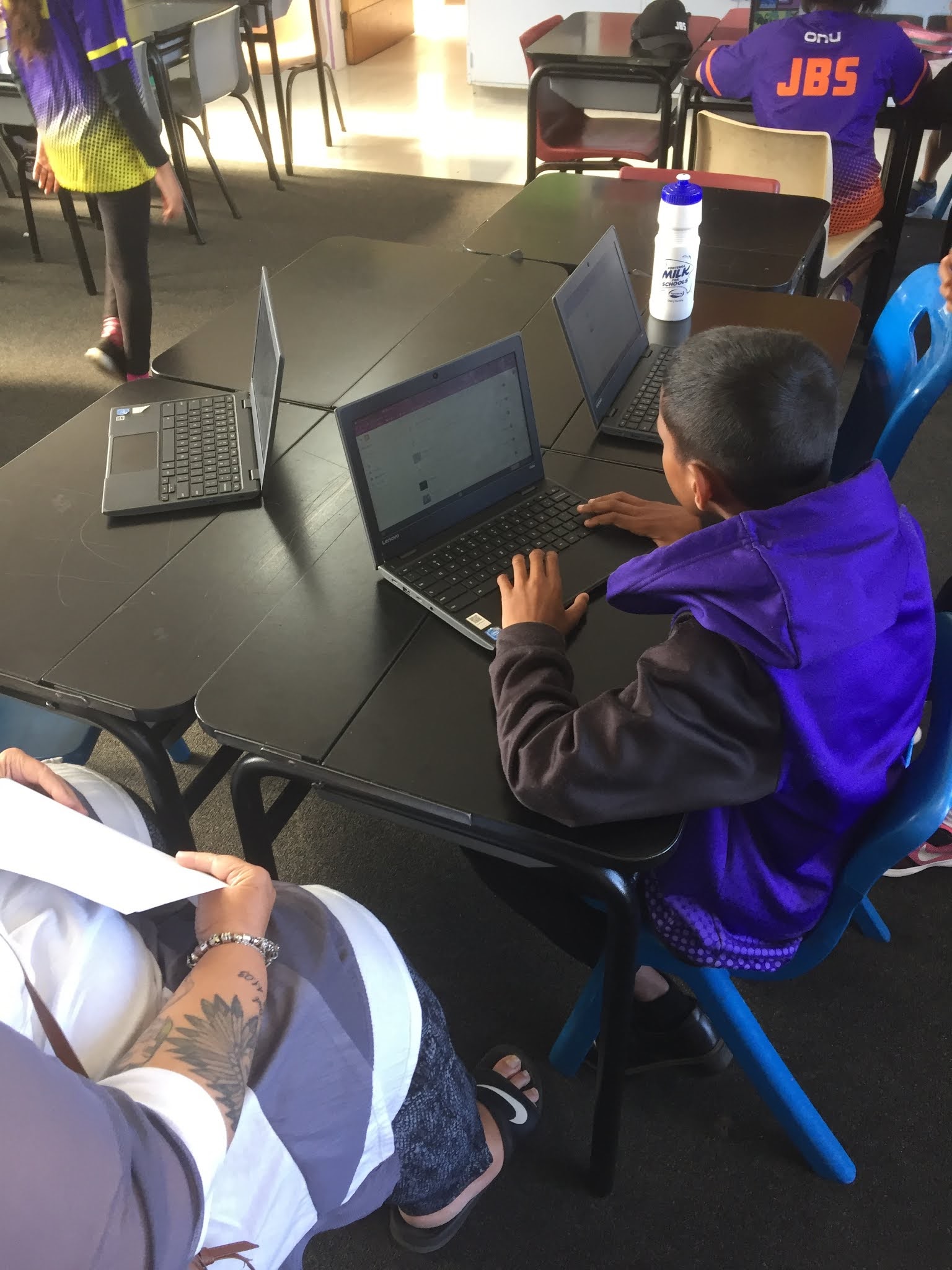
Below are the slides which Alexis presented at one of our Team Folau meetings. She talked through the slides and the ideas that stood out clearly for me were; Imagery, Character developments, and Historical consciousness. 


I applied the knowledge and skills that I have gathered from the PD with Alexis in the classroom. Students were able to do narrative biographies of people from their families. Below are the samples of some of the student's work.

A biographical narrative contains biological information, physical descriptions, action details, anecdotes, and personal interpretations of the subject. Authors of biological narratives typically choose people or characters that have personal significance to them. The point or direction of the narrative outlines the personal impact the subject has in the author's life. In a biographical narrative, the author highlights certain details to develop an in-depth impression of the person. Sensory details replace direct explanations. The author creates an emotional impact with the narrative using specific and highly descriptive words and phrases.

Thoughts and summaries expand upon the details and emphasize the turning points in the narrative. Personal perspective is a key aspect of a biographical narrative. The thoughts of the author relate the turning points of the subject to their own life throughout the narrative. The introduction and conclusion of the narrative tie the elements of the story together and summarize the overall meaning.

Biographical narrative essay

 Writing a biography  Biography: a story about a person's life.  Short Vs. Long biographies.  Biographies can range in size and detail from just the basic details about a person, their birth and death, and what they accomplished or did all the way.  It is a written account of the series of events that make up a person’s life.  Biographies analyze and interpret the events in a person's life.  They try to find connections, explain the meaning of actions, and make arguments about the significance of the person's accomplishments or life activities.  They are often about historical figures, but they can also be about people still living. 

 While researching the subject, you should collect all the basic facts of your subject’s life experience.  These include  Date and place of birth and death  Family information  Lifetime accomplishments  Major events of life  Effects/impact on society, historical significance.

 In researching simply to find an individual to create a biography, you should first look to find an individual that is interesting to you.  The more you are interested in the individual the more apt you will be to recreate this individual's life in a manner that is engaging to the reader once your biography is complete.  Be sure to look into not only the obviously important facts.  Depending on the amount of information you have you may display your findings simply in chronological order of the individual's life, or you may choose to travel out of chronological order and explain events in a piecemeal fashion to back up logic or reasoning as to why other events occurred within the person's life.

 You will choose your person because you think he or she is interesting, so you certainly do not want to burden your paper with an inventory of boring facts. The last thing you want to do is bore your teacher. Your goal is to impress your reader.  As always, you will want to start off with a bang and captivate your reader.  It is a good idea, to begin with, a really interesting statement, a little-known fact, or a really intriguing event.  After all, your teacher has probably read other biographies concerning your subject.  You should avoid starting out with a standard but a boring line like "Meriwether Lewis was born in Virginia in 1774."  It is possible to start like this: Late one afternoon in October 1809, Meriwether Lewis arrived at a small log cabin nestled deep in the Tennessee Mountains. By sunrise on the following day, he was dead, having suffered gunshot wounds to the head and chest. His body was also slashed several times with a shaving razor.
 The following questions should be considered in your biography:  Was there something in your subject’s childhood that shaped his/her personality?  Was there a personality trait that drove him/her to succeed or impeded his progress?  What adjectives would you use to describe him/her?  What were some turning points in this life?  What was his/her impact on history?


Writing guidelines  In a biographical essay, you write about the life and personality of a person who actually lived.  A biographical essay should have the following characteristics:  a real-life subject,  a thesis statement that states a specific idea about that person’s life and achievements,  an account of one or more major events in the subject’s life,  a description of the subject’s key character traits.
Prewriting  Choose your subject:  Choose a person whose life seems especially appealing to you.  Once you have decided on a subject, take notes about what you already know- about his or her life and personality.
 Gather information:  Once you have reviewed what you know, think about what areas of this person’s life you would like to focus on.  Then, write down some questions to help you direct your research.
 Draw conclusions:  Based on your research, make some decisions about your subject’s personality.  What did he or she value most? Is there a connection between your subject’s character traits and his or her role in history?
 Write a thesis statement:  You have learned more about your subject and reflected on his or her life and personality.  You are ready to write a thesis statement. George Washington was not a very imaginative man, but he had a practical, steady mind—a quality that was necessary to give stability to our new nation.
Drafting  Decide how to organize your writing.  The simplest way to organize a biographical essay is to cover the main events of the subject’s life chronologically.  Another type of organization focuses on a few important events in the person’s life, building up to the one that you think is most important.
 Write an introduction.  The first paragraph of your essay introduces your subject.  The introduction leads up to the thesis statement, which expresses the idea you will develop in your essay.  Write the body paragraphs:  Support your thesis with examples and details.  Use the information you have gathered to support and develop your idea about your subject.  Use an informative, lively tone:  As you write your draft, enliven your writing with vivid language and colorful details that appeal to the senses.  Write a strong conclusion:  In your final paragraph, restate your view of the person about whom you are writing.  Tell the reader what this individual has contributed to the country.
Revising  Revise to strengthen your thesis:  Do the introduction and thesis statements create a clear, unified impression of the person about whom you are writing?  Do the body paragraphs develop this impression?  Revise to meet written English-language conventions:  Are all sentences complete, with a subject and a verb?  Are all the words spelled correctly?  Are all proper nouns capitalized, including names of people  and places?  Did you use proper punctuation?

Rubric for Self-Assessment Score 1 Score 2 Score 3 Score 4 Organization Shows lacks of organizational strategy Chooses an organization not suited to the topic Uses a reasonably clear organization which but occasionally includes less relevant information Supports the thesis with a series of logically ordered paragraphs creating a clear impression of a real-life person, organized chronologically, by order of importance, or by character trait 
Presentation Does not provide any facts, details, or examples about the subject’s life and personality Does not discuss the life and personality adequately in any detail; does not link supporting information to the thesis Discusses the life and personality adequately with several facts, details, or examples; links most supporting information to the thesis Discusses the life and personality of the subject in a way that develops a clear impression of the person with facts, details, and anecdotes from the subject’s life; links all information to the thesis 
Use of Language Writes incomplete sentences; uses language poorly; sounds confused; includes many Uses the same types of sentences without varying them; repeats words; includes many mechanical errors Uses some variety in sentence structure and vocabulary; includes few mechanical errors Varies sentence structure and vocabulary successfully; includes no or very few mechanical errors


Above: Collection of Samples of Narrative Biographies by Room 22 students.

Thursday, 15 April 2021

Maths DMIC. Term 1. 2021

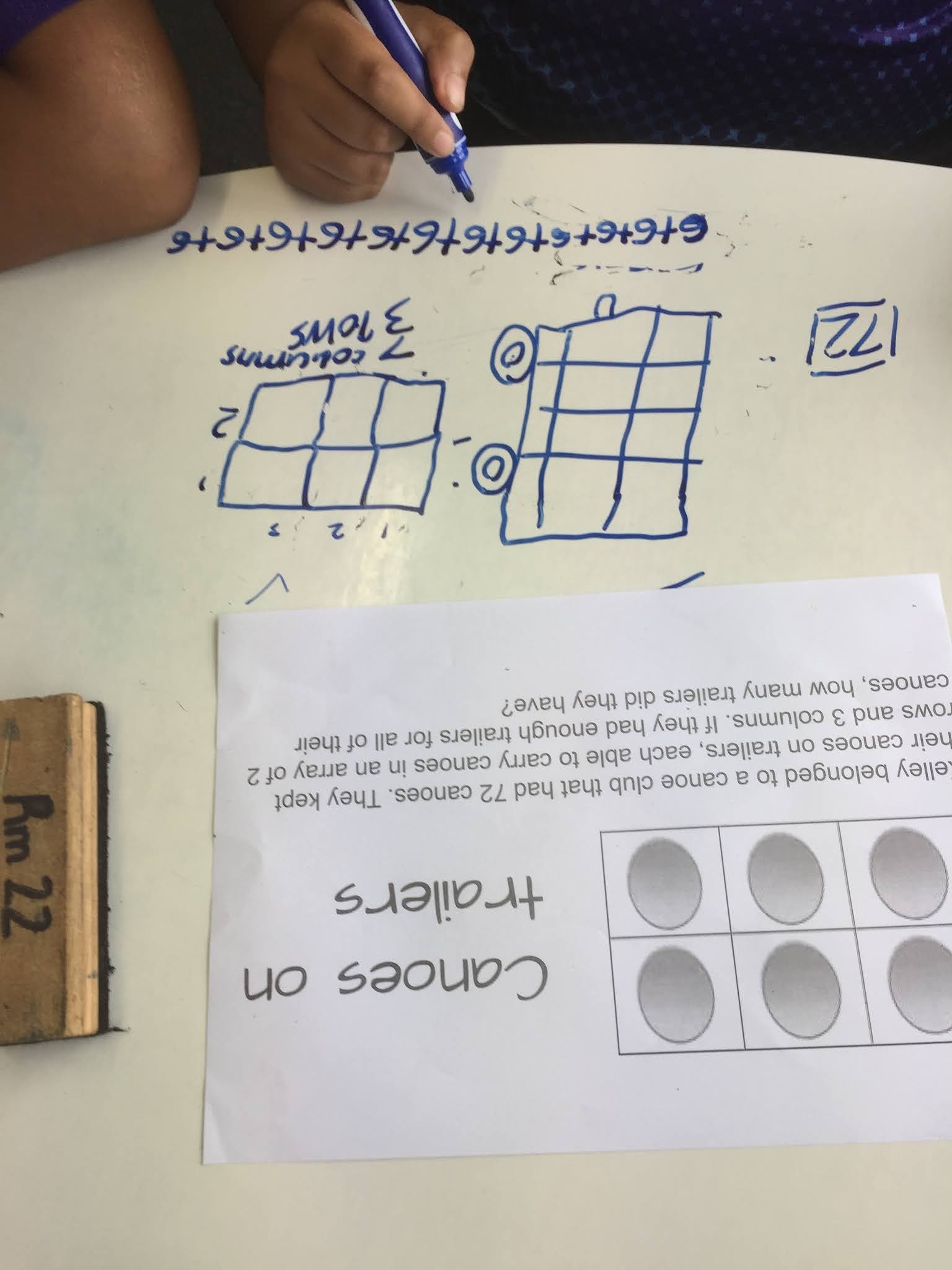
 Room 22 DMIC

DMIC is the acronym Developing Mathematical Inquiry Communities. Our JBS is taking advantages of this approach in teaching maths to our akonga. It is proven through the pilot research that DMIC is the quickest way to progress students in maths and it is the most advanced form of approach that can be easily applied in teaching and learning.

The two major drivers for DMIC are:
  • taking urgency on raising the children's mathematical understanding and practice so that when they go on to secondary school and beyond all doors will be open to them
  • the need to find ways of connecting children to the rich mathematical histories to be found in their cultures

Evidence in Action

  • Children are often a lot more knowledgeable and capable than their teachers realise.
  • Effective links are created between school learning and children's lives and identities
  • If we underestimate children's abilities, we inevitably limit their opportunities to learn.
  • Pedagogical practices enable classes and groups to work as caring, inclusive, and cohesive learning communities.
  • Mixed-ability groups give children multiple opportunities to learn from each other.
  • For many children, a collectivist approach to learning ('no-one gets left behind) is more effective than a competitive approach.
  • Children appreciate having agency in their own learning.
  • Maths is about being able to explain how the answer has been arrived at as well as getting the answer.
  • Children need to be taught how to work productively and respectfully together.
  • Seeing outside expertise working with their own children can create dissonance in teachers, causing them to question existing theories and becoming a catalyst for substantive change.
  • Effective maths teaching involves careful preparation: to generate worthwhile problems that build on children's proficiencies, to connect to big mathematical ideas, and to anticipate children's mathematical thinking.
  • Teachers become students of their own students, learning to use children's thinking as a springboard for further learning.
  • Teachers can find it beneficial to prepare collaboratively.


Mixed ability grouping

  • the role that school leadership can play in recognising the need for, initiating and supporting pedagogical change
  • the use of demonstrated external expertise to create dissonance that leads to productive change
  • the 'how' of scaffolding reciprocal or alternating tuakana teina roles in student group work
  • effective mixed-ability grouping as a key to accelerating improvement and promoting equity
  • Respectful engagement with teachers when existing theories are being challenged.

Because ability grouping has for so long been accepted as the norm in New Zealand schools:

  • it is what parents expect (and often want)
  • expertise in working with mixed-ability groups is limited
  • shifting to mixed-ability groups can generate huge initial dissonance for teachers
  • the experience of DMIC teachers and leaders is an important resource for supporting colleagues contemplating the shift.

Using mixed-ability grouping requires expert pedagogical and curriculum content knowledge, and the capability to work simultaneously and effectively with diverse learners.


Problem and launch

The DMIC approach envisages a three-part structure to maths lessons: the ‘launch’ at the beginning, problem-solving in mixed-ability groups, and the ‘connect’ at the end. 
  • Problems need to be carefully designed so that:
    • the children will understand what it is they are trying to solve
    • they connect to big, worthwhile maths ideas
    • they connect in some way to the lives/communities of the children
  • Devising good problems is best done collaboratively
    • pedagogical leaders 'talk the walk'
    • meetings optimise coherence, value and impact of pedagogical design
    • choice of problems is linked to the curriculum
    • exploration of possible misconceptions
  • An effective launch ensures that:
    • the problem makes sense to the students
    • the problem matters to the students
  • Pedagogical leadership.

Learning to listen

  • By listening to the children, teachers can learn how to improve their teaching
  • Instead of telling, teachers support children's learning by asking the right questions
  • Teachers can elicit questions from children that will support the learning of the group
  • A shift from mostly teacher talking to mostly children talking greatly increases learning by both children and teacher
  • Students have opportunities to resolve cognitive conflict
  • Children love that they can make school learning their own by having learning conversations with each other.

Teacher development

  • A shift in mindset has been required of both teachers and students
  • Teachers have had to develop new pedagogical knowledge
  • The focus in the second year is on embedding the pedagogy in classrooms
  • School leadership is now working to reduce dependence on external facilitation
  • Internal staff ownership and pedagogical leadership are keys to ongoing improvement.

Strategies include:

  • Peer observations in each other's classrooms
  • Collaboration that involve open discussion, critique and support
  • Lesson study:
    • A group of teachers plan the lesson
    • One teacher teaches while the rest of the group observes
    • The group critiques each part of the lesson to see how it could be improved
    • Another teacher teaches the lesson, drawing on what has been learned through the group critique.

Impacts

  • The importance of high expectations for all children, supported by effective scaffolding
  • The need to nurture educationally powerful connections to rich histories of mathematics in children's own cultures
  • Positive social norms in mathematics can be transformative of classroom culture across the curriculum
  • The shift in teacher practice can strengthen student agency, collaboration and leadership.

Group norms

  • Creating new social norms for productive collaboration is a major endeavour
  • A collaborative, respectful whānau model informs the values on which the group norms are based; teaching and learning practice consistently exemplifies these values
  • Children need to be explicitly taught the 'how' of productively participating and contributing
  • The 'talk moves' provide a framework for productive engagement that can be taught to, internalised, owned and propagated by children.
  • Shared responsibility for each other's learning goes hand-in-hand with high expectations of each other: no passengers, everyone will explain clearly, no one gets left behind
  • The group is responsible for ensuring that each member can explain and justify the strategy used. A 'one pen per group' policy supports productive collaboration.
  • When well-implemented, DMIC leads to accelerated improvement in literacy as well as mathematics.

Learning for life

  • setting maths in meaningful contexts is a key to engagement, understanding and agency
  • children like to have agency in their own learning
  • working on 'real' problems builds agency.

This reinforces the crucial importance of good problem design and teaching children how to work productively in collaborative, mixed-ability groups.
Speaking of their experience of DMIC maths, the children say:

  • working on problems that are situated in real life is a good way to learn about life
  • it's great to have opportunities to do your own thinking and come up with your own strategies
  • it's great to be challenged
  • sharing thinking gives you opportunities to learn from others
  • mistakes are opportunities for learning.

Effective implementation of DMIC gives students confidence in their ability to do challenging mathematics.

Learning together

  • Working in mixed ability groups exposes you to a variety of possible approaches, gives you choices
  • Listening to other people's ideas and reflecting on your own ideas are important for learning
  • Sharing your thinking with others is worthwhile for you, too
  • The 'talk moves' are a useful means for supporting group members to share and clarify their thinking
  • We like being able to take over some of the role that teachers have traditionally had
  • We can ask other students (not just the teacher) questions

Perspectives

  • As teachers/leaders we don't know what we don't know, so we need opportunities to check our thinking with someone who knows/understands more than we do
  • Core Pasifika values are at the heart of Pasifika Maths/DMIC
  • In-class modelling is a powerful tool for challenging existing theories and creating dissonance. By observing Bobbie in action in the classroom, teachers realised that their children were capable of a lot more than they had imagined and that their own low expectations had been limiting their opportunities to learn
  • It is highly motivating to see theory in action, especially with our own students, and even more so to see the theory working successfully the first time
  • In-class mentoring and co-construction enables gaps in teacher knowledge to be addressed in a timely way
  • It's a journey, and teachers learn best when they feel they are in a safe and supportive environment.

It’s a journey

  • You have to become uncomfortable with how you are teaching before you can become a more effective teacher
  • It is important that the level of discomfort is not so high that you give up
  • Teachers come to understand how to better teach mathematics through developing their own content knowledge, understanding children's learning processes and anticipating children's misconceptions in mathematics
  • Teaching maths effectively requires major investment in preparation time, particularly to construct problems that meet multiple criteria
  • Challenge, in-class modelling and mentoring from external experts, managed in a safe and caring manner, are powerful tools for demonstrating what is possible, creating dissonance and supporting teacher change
  • The DMIC lesson framework (launch, problem-solving in groups, connect) imposes discipline on planning and teaching, but getting each phase right requires practice
  • It is good for children to see their teachers as learners: taking risks, making mistakes, accepting feedback
  • The move from teaching based on fragmentary learning intentions to learning that connects to big mathematical ideas is very important and can involve a major mind shift
  • Uncertainty about what the big mathematical ideas are is stressful for teachers, especially those who are not secure in their content knowledge
  • The 'connect' at the end is powerful because that is where the learning is consolidated
  • Once children realise that mistakes are part of learning they are happy to take risks and to question and share
  • Learning, whether by the children or teacher, thrives in a safe and supportive environment.

Culturally responsive pedagogy

  • Assumptions based on our own experiences and cultural mindset create barriers to learning for children who don't share them and can't relate to them
  • Children learn best in environments where their identities are valued
  • Teaching effectively requires forging educationally powerful connections to students' lives and identities
  • Children engage productively with maths when problems are set in contexts that they can relate to and understand
  • Learning requires active participation, so children from cultures that do not encourage questioning or putting forward ideas, for example, need to be actively supported to overcome these inhibitions
  • Mistakes have to be repositioned as a necessary and valuable part of learning if children are to be willing to take the risks that learning entails
  • Caring for students can mean making them uncomfortable by pushing them to think (pressing them for understanding) and to publicly contribute their thinking
  • Pasifika students learn best in a supportive collective characterised by reciprocal benefits and responsibilities. Parallels between a whānau and a community of learners can be leveraged.
  • When supposedly 'low' students are exposed to mixed-ability, challenging maths, they can surprise teachers
  • Ambitious teaching gets far more out of students than low expectations
  • Negative attitudes towards maths are not inevitable. Once they get over the initial shock, children love to be challenged and to be active participants in their own learning.

Fundamental shifts

  • When supported by effective pedagogy, heightened expectations lead to increased achievement
  • The belief that some children will never succeed needs to be replaced by the belief that all will 'get there' if certain things happen
  • When internal dialogue is externalised it can be examined
  • Effective maths teaching puts less emphasis on doing mathematical activities and getting the answer and more on explaining and justifying
  • By listening more, teachers become more aware of what/how the children are thinking at the same time as they provide a space for the children to do the explaining
  • Asking the right questions is more productive of learning than rescuing
  • In effective mixed-ability groups members are held jointly accountable for understanding and, if called on, any member can explain and justify the group's thinking
  • Children develop positive maths identities when supported to assume greater agency in their own learning
  • If children are questioning, thinking, and taking responsibility for themselves in maths, chances are they'll be acting similarly in other contexts


https://www.educationcounts.govt.nz/topics/bes/developing-mathematical-inquiry-communities


Inquiry

 Celebrating My Learning. "Celebrating My Learning" could refer to recognizing and acknowledging personal achievements and growth ...