Showing posts with label Te Tiriti o Waitangi partnership. Show all posts

Tuesday, 28 November 2023

Inquiry

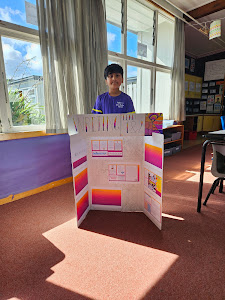
 Celebrating My Learning.


"Celebrating My Learning" could refer to recognizing and acknowledging personal achievements and growth in the process of acquiring knowledge or skills. This concept emphasizes the importance of reflecting on one's learning journey, acknowledging accomplishments, and taking pride in the progress made. Here are a few aspects that might be associated with celebrating learning:

  1. Reflecting on Achievements: It involves looking back at what has been learned, the challenges that have been overcome, and the skills that have been developed. This reflection helps individuals appreciate their efforts and the progress they've made.

  2. Setting and Achieving Goals: Celebrating learning often involves setting specific learning goals and milestones. When these goals are achieved, it's important to take the time to acknowledge and celebrate the success, reinforcing a positive attitude towards learning.

  3. Recognizing Effort and Persistence: Learning is often a journey that requires effort, perseverance, and dedication. Celebrating learning includes recognizing and appreciating the hard work and commitment put into the process, regardless of the outcome.

  4. Sharing Achievements: Celebrating learning can be a social activity where individuals share their accomplishments with others. This can foster a supportive learning community and inspire others to pursue their own learning goals.

  5. Incorporating Feedback: Constructive feedback is a valuable part of the learning process. Celebrating learning can involve incorporating feedback received from teachers, mentors, or peers and using it to improve and refine one's skills.

  6. Embracing a Growth Mindset: Celebrating learning is closely tied to adopting a growth mindset. This mindset encourages viewing challenges as opportunities for growth and understanding that intelligence and abilities can be developed through dedication and hard work.

  7. Creativity and Expression: Celebrating learning can also involve expressing newfound knowledge or skills in creative ways. This might include creating projects, presentations, or demonstrations that showcase what has been learned.

Whether in an educational setting, professional development, or personal enrichment, the act of celebrating learning helps individuals stay motivated, build confidence, and foster a positive attitude toward continuous improvement. It's about recognizing that learning is a dynamic and ongoing process, and each step forward is a reason for celebration

Monday, 29 May 2023

Writing - Informational

 Why is it important to teach informational writing to students?

Teaching informational writing to students is important for several reasons:

Communication Skills: Informational writing helps students develop effective communication skills. In today's information-driven society, the ability to convey ideas clearly and concisely is crucial. By learning how to organize and present information in a logical and coherent manner, students can effectively communicate their thoughts, opinions, and findings to others.


Critical Thinking: Writing informative texts requires students to gather, analyze, and evaluate information from various sources. It encourages them to think critically, assess the credibility of sources, and synthesize information to create a well-supported argument or explanation. These critical thinking skills are transferable to other subjects and real-life situations.


Research Skills: Informational writing often involves conducting research to gather relevant facts, data, and evidence to support claims or provide explanations. Teaching students how to locate, evaluate, and integrate information from different sources cultivates their research skills. They learn how to navigate through various resources, such as books, articles, websites, and databases, and use proper citation methods.


Empowering Learners: Writing informatively empowers students to become independent learners. They gain the ability to explore topics of interest, conduct research, and share their knowledge with others. This process enhances their self-confidence and nurtures a sense of ownership over their learning. It encourages them to pursue their curiosity, develop expertise in specific areas, and engage in lifelong learning.


Real-World Applications: Informational writing mirrors the types of writing students are likely to encounter in academic and professional settings. Reports, essays, research papers, and business documents often require presenting information clearly, concisely, and objectively. By honing their informational writing skills, students are better prepared for future educational and career endeavors.


Media Literacy: In an era of abundant information and digital media, teaching informational writing helps students become discerning consumers of information. They learn to evaluate sources for reliability, credibility, and bias. They can distinguish between reliable sources and unreliable ones, understand the importance of fact-checking, and make informed judgments about the information they encounter.


Critical Analysis: Informational writing encourages students to examine different perspectives and engage in critical analysis. They learn to identify biases, question assumptions, and evaluate the strengths and weaknesses of arguments. This analytical mindset fosters a deeper understanding of complex issues and nurtures the ability to engage in informed debates.


In summary, teaching informational writing equips students with essential skills for effective communication, critical thinking, research, independent learning, and navigating the information-rich world. These skills are vital for their academic success and future professional endeavors.

Thursday, 25 May 2023

The Arts - Visual

 What is Zentangles?

Zentangle is a method of creating intricate and structured patterns through repetitive lines, curves, and dots. It is a form of artistic expression that combines meditation, focus, and creativity. The term "zentangle" is derived from "zen," referring to a state of calmness and mindfulness, and "tangle," which represents the intricate nature of the patterns.

The practice of zentangle involves using a pen or marker to draw repetitive patterns within defined shapes or borders. These patterns are often abstract and can be simple or complex, but they are always built from a combination of elemental strokes. The process is meant to be deliberate, relaxing, and non-representational, allowing the artist to focus on the present moment and achieve a meditative state.

Zentangle is often described as a form of


structured doodling. It was developed by Rick Roberts and Maria Thomas in the early 2000s as a way to promote relaxation, creativity, and mindfulness. Since then, it has gained popularity as a therapeutic art form, helping individuals reduce stress, improve focus, and enhance their artistic skills.

Zentangle artwork can be created on small pieces of paper, sketchbooks, or even larger surfaces. It has also expanded beyond traditional black-and-white designs, with artists exploring colored zentangles, combining various art mediums, and incorporating zentangle patterns into other forms of art.

The beauty of zentangle lies in its accessibility and the freedom it provides for personal expression. There are no strict rules or guidelines to follow, and each artwork is unique to the individual artist. It is a versatile art form that can be enjoyed by people of all ages and skill levels, offering a way to relax, unwind, and tap into one's creativity.

Wednesday, 10 May 2023

Physical Education

 Importance of Physical Education in Schools.


  1. Promotes overall health and well-being: Physical education helps students maintain a healthy lifestyle by providing them with regular exercise, which helps to reduce the risk of obesity, heart disease, and other health issues.

  2. Improves academic performance: Studies have shown that students who participate in regular physical education classes tend to have better academic performance, including improved grades and test scores.

  3. Encourages teamwork and social skills: Physical education classes often involve team sports and activities, which help students learn how to work together, communicate effectively, and develop social skills.

  4. Enhances self-esteem and confidence: Regular physical activity can help students develop a positive self-image, improve self-esteem, and gain confidence in their abilities.

  5. Reduces stress and anxiety: Exercise is known to reduce stress and anxiety levels, and physical education classes provide students with a healthy outlet for their energy and emotions.

  6. Develops motor skills and coordination: Physical education classes help students develop important motor skills, such as balance, coordination, and agility, which are essential for healthy physical development.

  7. Teaches lifelong fitness habits: By teaching students about the benefits of regular exercise and healthy living, physical education classes help to instill lifelong fitness habits.

  8. Fosters discipline and perseverance: Participating in physical education classes requires discipline and perseverance, which are important life skills that can benefit students in all areas of their lives.

  9. Encourages creativity and problem-solving: Physical education classes often involve problem-solving activities and challenges, which can help students develop their creativity and critical thinking skills.

  10. Promotes cultural awareness and diversity: Physical education classes often include activities and sports that reflect the diversity of different cultures and communities, which can help to promote cultural awareness and understanding among students.


Monday, 1 May 2023

PD Trip to Northland


 Trip to Northland

In the Term 1 2023 school holidays, some of the JBS staff went on a trip to Northland. This trip was one of our PD. I was, in particular, excited about this trip and was looking forward to going on this trip. The main focus of the trip was to learn the wonderful histories of the Northland. I was in search of a New Zealand history for my Inquiry LTP for term 2. So I decided to get on this trip. 


While we were in Northland, we learned numerous histories of the various parts of the region. One particular history that caught my attention was the Kauri Gum Field. The history behind the Kauri Gum Field is as follows below. 


Kauri gum is a resin (a sticky substance) produced by New Zealand’s giant kauri trees. The resin helps protect the tree by filling in holes and damaged areas. Kauri trees can live for more than 1,000 years, so they make a lot of gum over a lifetime. As the trees die and fall, the ground where they grew becomes littered with kauri gum. Over time, this often gets covered by soil or swamps. Most kauri gum is found in Northland.


From the 1840s, kauri gum was exported to Britain and America to make varnish. Later, it was used in linoleum, a floor covering. In the 19th and early 20th centuries, many people headed for the gum fields of Northland, hoping to find gum and sell it. They dug it out of the ground and found it in the swamps. Many of these areas no longer had kauri trees – they were scrublands covered in mānuka.


In the 1890s, it was getting harder to find gum in the ground. People started climbing living kauri trees to get gum. Some cut the trees, to make them bleed gum – but this often killed the trees.

The kauri gum industry continued into the 20th century. In the 1930s, cheaper materials for making varnish were invented. The price of kauri gum fell, and by the 1940s the gum industry was coming to an end.

What has once forested the most part of the Northland has deliberately disappeared. Only a few Kauri trees are left and they are completely protected.


Dalmatians, Māori, and British worked as diggers. They used a spear to find gum and a specially designed spade to dig it up. 

Storekeepers bought kauri gum from diggers. It was then taken to the nearest port and shipped to Auckland, where gum merchants cleaned it, graded it, and exported it. From 1850 to 1900, kauri gum was Auckland’s main export.


By the 1890s, it was getting harder to find gum in the ground. Some diggers began collecting gum from around the base of living trees and using ropes to climb to the forks where the gum was often found.

They also started cutting trees to make them bleed gum. They made V-shaped cuts called ‘taps’ in the trunk, returning months later to get the gum. Collectors used spikes on their boots and two long iron hooks to scale the tall trunks – in much the same way that ice climbers today scale frozen waterfalls with ice axes and crampons. The collectors carried ropes to get back down from the giant trees, which could be up to 50 meters high. It was dangerous work, and lives were lost. One story tells of some loggers finding a rope at the base of a large kauri. They felled the tree, and among the branches found the skeleton of a gum collector who must have climbed the tree and then dropped his rope.

At first, bled gum was seen as a ready new supply, although of poorer quality. However, it was soon clear that the practice was killing trees, and in 1905 it was banned in all state forests.


Storekeepers were the main buyers of kauri gum. They ‘grubstaked’ many diggers – allowed them to buy supplies on credit, on condition that they sold their findings to the storekeeper. Once a week the storekeeper did his rounds, delivering supplies and buying gum.

Gum was laid out at the gum tip – a cleared area, often on a rise so that it received the sun and wind. The gum’s purity was judged, a price was decided and the gum was weighed. Horse-drawn carts and large bullock teams pulled the gum on sleds to the nearest port. It was loaded onto barges, coastal cutters, and steamers, and shipped to Auckland. In the wet months, when Northland’s clay roads were boggy, transport costs often increased and supplies became more expensive.


Gum was unloaded at Auckland’s wharves and taken to the major buyers’ warehouses. It was then cleaned again and graded, ready for export. Gum was exported in boxes made from heart kauri, a high-quality timber that was often used to make furniture at the destination.


In the 1930s cheaper synthetics were developed for making varnish and linoleum. The price of gum fell, and by the 1940s it was a sunset industry. In 1985 a processing plant was built at Kaimaumau, north of Awanui, to extract resins and waxes from kauri chips and dust from a peat swamp, but it had technical problems and closed in 1989.


in varnish, but around 1910, overseas manufacturers began using poorer-grade gum to make linoleum. A market was created for low-grade gum, including small pieces known as gum nuts and chips, and previously worthless scrapings and dust.

New techniques were needed to recover small gum pieces from soil and swamps. Water-filled drums with screens – called hurdy-gurdies – washed away the soil and left behind the gum and bits of wood. Where large areas were dug over, pipes poured muddy water onto screens and sieves, and men agitated the mixture to wash away the soil. It was muddy, wet work. By the 1920s, new machines – basically larger oil-driven hurdy-gurdies, used by teams of men – could process a lot more raw material.

The material that was left after washing – gum, stones, bits of wood and debris – was dried in the sun. Then it was winnowed by throwing it in the air. A breeze carried away the lighter pieces, leaving gum behind. Later, winnowing machines were built, along with machines to separate the gum from worthless material and to clean it. Gold mining techniques were trialed – in the late 1910s a disused Otago gold dredge worked a swamp near Awanui, but without success.


Below is the link that tells the story of our trip to Northland. 

https://tome.app/jbs-a12/whakarongo-ki-te-hikoi-ki-te-rerenga-wairua-clgzkan6v00sb9r3z2t07uz4l


Thursday, 31 March 2022

Handwriting

 Handwriting


Practicing handwriting is very important so that we as writers can form our letters automatically. This means we do it without thinking about how to form the letter, just like driving we do not think about how to put the brake on, we just do it.


It is important that they start in the correct place and go in the right direction. Ideally, a child should form their letters fluently so it is important they keep practicing a letter until they can form it correctly and quickly without too much thinking about how to do it.


HANDWRITING GOALS

1. All upper case letters touch the top and bottom of the line.

 2. All lower case letters are half size and sit on the bottom line. 

3. All letters should be formed correctly and be an even and consistent size. 

4. All numbers are 3/4 size. They sit on the bottom line. 

5. The lower case ‘t’ is 3/4 size. It sits on the bottom line but doesn't touch the top line. 

6. The upper case ‘M’ touches the top and bottom line and the middle point touches the bottom line. 

7 The upper case ‘W’ touches the top and bottom line and the middle point touches the top line., 

8. The lower case ‘k’ is the loopy one. 

9. The upper case ‘Y’ is point one. 

10. Letters with tails must sit on the bottom line and the tails drop halfway down into the line below


Resources

http://nzteachersprimary.weebly.com/uploads/1/0/5/0/10506400/handwriting_goals_checklist.pdf


Thursday, 15 April 2021

Maths DMIC. Term 1. 2021

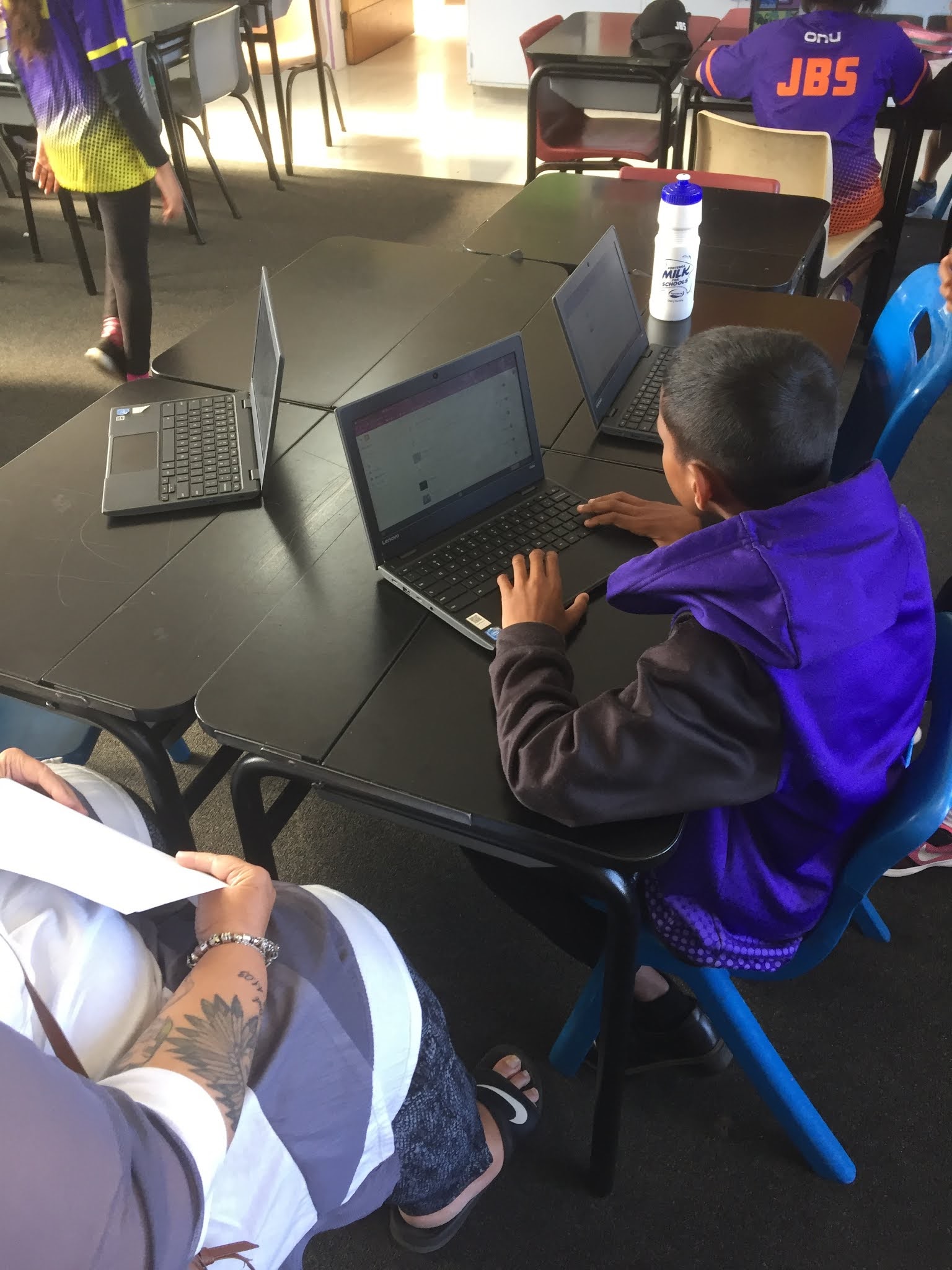
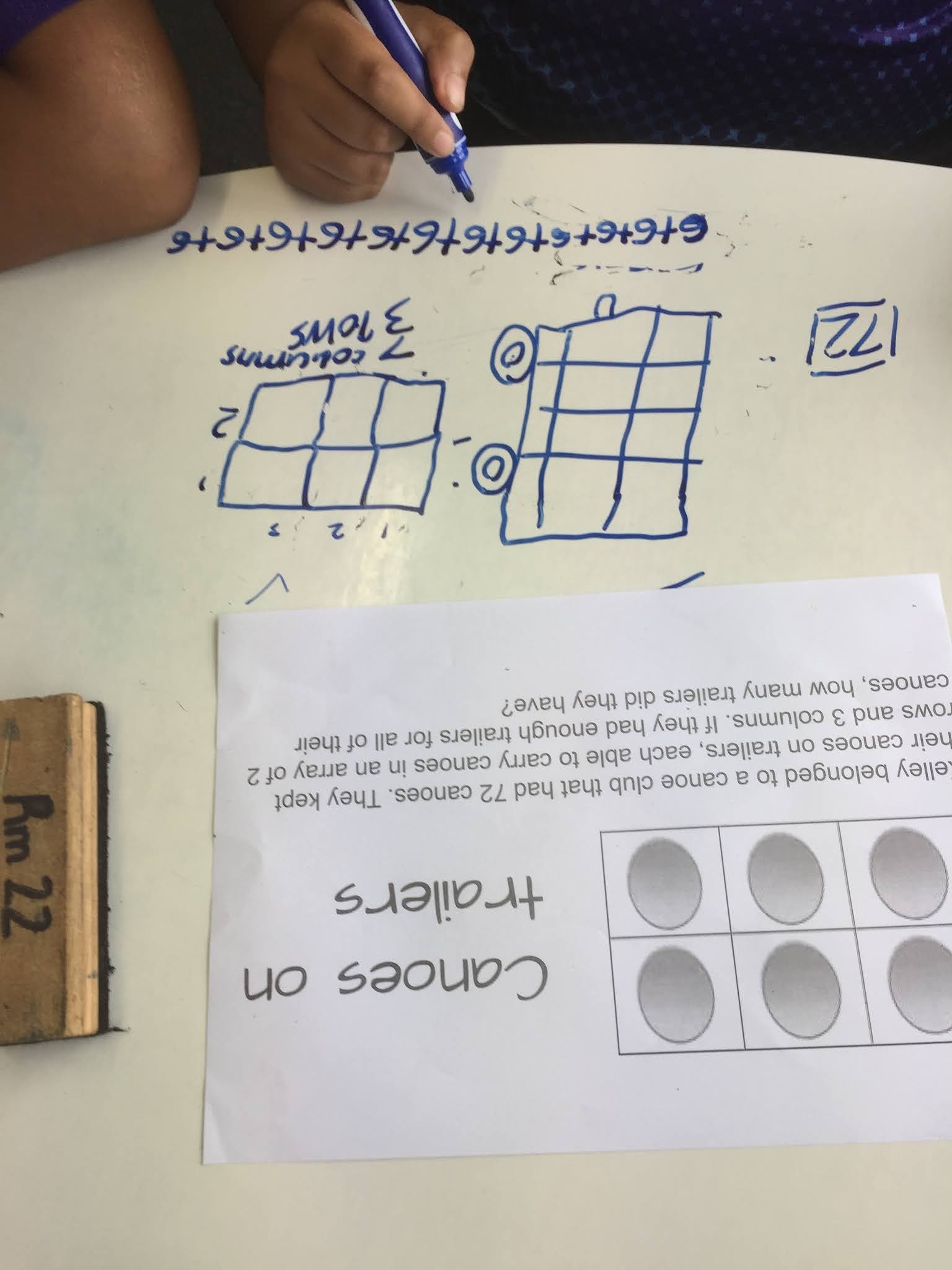
 Room 22 DMIC

DMIC is the acronym Developing Mathematical Inquiry Communities. Our JBS is taking advantages of this approach in teaching maths to our akonga. It is proven through the pilot research that DMIC is the quickest way to progress students in maths and it is the most advanced form of approach that can be easily applied in teaching and learning.

The two major drivers for DMIC are:
  • taking urgency on raising the children's mathematical understanding and practice so that when they go on to secondary school and beyond all doors will be open to them
  • the need to find ways of connecting children to the rich mathematical histories to be found in their cultures

Evidence in Action

  • Children are often a lot more knowledgeable and capable than their teachers realise.
  • Effective links are created between school learning and children's lives and identities
  • If we underestimate children's abilities, we inevitably limit their opportunities to learn.
  • Pedagogical practices enable classes and groups to work as caring, inclusive, and cohesive learning communities.
  • Mixed-ability groups give children multiple opportunities to learn from each other.
  • For many children, a collectivist approach to learning ('no-one gets left behind) is more effective than a competitive approach.
  • Children appreciate having agency in their own learning.
  • Maths is about being able to explain how the answer has been arrived at as well as getting the answer.
  • Children need to be taught how to work productively and respectfully together.
  • Seeing outside expertise working with their own children can create dissonance in teachers, causing them to question existing theories and becoming a catalyst for substantive change.
  • Effective maths teaching involves careful preparation: to generate worthwhile problems that build on children's proficiencies, to connect to big mathematical ideas, and to anticipate children's mathematical thinking.
  • Teachers become students of their own students, learning to use children's thinking as a springboard for further learning.
  • Teachers can find it beneficial to prepare collaboratively.


Mixed ability grouping

  • the role that school leadership can play in recognising the need for, initiating and supporting pedagogical change
  • the use of demonstrated external expertise to create dissonance that leads to productive change
  • the 'how' of scaffolding reciprocal or alternating tuakana teina roles in student group work
  • effective mixed-ability grouping as a key to accelerating improvement and promoting equity
  • Respectful engagement with teachers when existing theories are being challenged.

Because ability grouping has for so long been accepted as the norm in New Zealand schools:

  • it is what parents expect (and often want)
  • expertise in working with mixed-ability groups is limited
  • shifting to mixed-ability groups can generate huge initial dissonance for teachers
  • the experience of DMIC teachers and leaders is an important resource for supporting colleagues contemplating the shift.

Using mixed-ability grouping requires expert pedagogical and curriculum content knowledge, and the capability to work simultaneously and effectively with diverse learners.


Problem and launch

The DMIC approach envisages a three-part structure to maths lessons: the ‘launch’ at the beginning, problem-solving in mixed-ability groups, and the ‘connect’ at the end. 
  • Problems need to be carefully designed so that:
    • the children will understand what it is they are trying to solve
    • they connect to big, worthwhile maths ideas
    • they connect in some way to the lives/communities of the children
  • Devising good problems is best done collaboratively
    • pedagogical leaders 'talk the walk'
    • meetings optimise coherence, value and impact of pedagogical design
    • choice of problems is linked to the curriculum
    • exploration of possible misconceptions
  • An effective launch ensures that:
    • the problem makes sense to the students
    • the problem matters to the students
  • Pedagogical leadership.

Learning to listen

  • By listening to the children, teachers can learn how to improve their teaching
  • Instead of telling, teachers support children's learning by asking the right questions
  • Teachers can elicit questions from children that will support the learning of the group
  • A shift from mostly teacher talking to mostly children talking greatly increases learning by both children and teacher
  • Students have opportunities to resolve cognitive conflict
  • Children love that they can make school learning their own by having learning conversations with each other.

Teacher development

  • A shift in mindset has been required of both teachers and students
  • Teachers have had to develop new pedagogical knowledge
  • The focus in the second year is on embedding the pedagogy in classrooms
  • School leadership is now working to reduce dependence on external facilitation
  • Internal staff ownership and pedagogical leadership are keys to ongoing improvement.

Strategies include:

  • Peer observations in each other's classrooms
  • Collaboration that involve open discussion, critique and support
  • Lesson study:
    • A group of teachers plan the lesson
    • One teacher teaches while the rest of the group observes
    • The group critiques each part of the lesson to see how it could be improved
    • Another teacher teaches the lesson, drawing on what has been learned through the group critique.

Impacts

  • The importance of high expectations for all children, supported by effective scaffolding
  • The need to nurture educationally powerful connections to rich histories of mathematics in children's own cultures
  • Positive social norms in mathematics can be transformative of classroom culture across the curriculum
  • The shift in teacher practice can strengthen student agency, collaboration and leadership.

Group norms

  • Creating new social norms for productive collaboration is a major endeavour
  • A collaborative, respectful whānau model informs the values on which the group norms are based; teaching and learning practice consistently exemplifies these values
  • Children need to be explicitly taught the 'how' of productively participating and contributing
  • The 'talk moves' provide a framework for productive engagement that can be taught to, internalised, owned and propagated by children.
  • Shared responsibility for each other's learning goes hand-in-hand with high expectations of each other: no passengers, everyone will explain clearly, no one gets left behind
  • The group is responsible for ensuring that each member can explain and justify the strategy used. A 'one pen per group' policy supports productive collaboration.
  • When well-implemented, DMIC leads to accelerated improvement in literacy as well as mathematics.

Learning for life

  • setting maths in meaningful contexts is a key to engagement, understanding and agency
  • children like to have agency in their own learning
  • working on 'real' problems builds agency.

This reinforces the crucial importance of good problem design and teaching children how to work productively in collaborative, mixed-ability groups.
Speaking of their experience of DMIC maths, the children say:

  • working on problems that are situated in real life is a good way to learn about life
  • it's great to have opportunities to do your own thinking and come up with your own strategies
  • it's great to be challenged
  • sharing thinking gives you opportunities to learn from others
  • mistakes are opportunities for learning.

Effective implementation of DMIC gives students confidence in their ability to do challenging mathematics.

Learning together

  • Working in mixed ability groups exposes you to a variety of possible approaches, gives you choices
  • Listening to other people's ideas and reflecting on your own ideas are important for learning
  • Sharing your thinking with others is worthwhile for you, too
  • The 'talk moves' are a useful means for supporting group members to share and clarify their thinking
  • We like being able to take over some of the role that teachers have traditionally had
  • We can ask other students (not just the teacher) questions

Perspectives

  • As teachers/leaders we don't know what we don't know, so we need opportunities to check our thinking with someone who knows/understands more than we do
  • Core Pasifika values are at the heart of Pasifika Maths/DMIC
  • In-class modelling is a powerful tool for challenging existing theories and creating dissonance. By observing Bobbie in action in the classroom, teachers realised that their children were capable of a lot more than they had imagined and that their own low expectations had been limiting their opportunities to learn
  • It is highly motivating to see theory in action, especially with our own students, and even more so to see the theory working successfully the first time
  • In-class mentoring and co-construction enables gaps in teacher knowledge to be addressed in a timely way
  • It's a journey, and teachers learn best when they feel they are in a safe and supportive environment.

It’s a journey

  • You have to become uncomfortable with how you are teaching before you can become a more effective teacher
  • It is important that the level of discomfort is not so high that you give up
  • Teachers come to understand how to better teach mathematics through developing their own content knowledge, understanding children's learning processes and anticipating children's misconceptions in mathematics
  • Teaching maths effectively requires major investment in preparation time, particularly to construct problems that meet multiple criteria
  • Challenge, in-class modelling and mentoring from external experts, managed in a safe and caring manner, are powerful tools for demonstrating what is possible, creating dissonance and supporting teacher change
  • The DMIC lesson framework (launch, problem-solving in groups, connect) imposes discipline on planning and teaching, but getting each phase right requires practice
  • It is good for children to see their teachers as learners: taking risks, making mistakes, accepting feedback
  • The move from teaching based on fragmentary learning intentions to learning that connects to big mathematical ideas is very important and can involve a major mind shift
  • Uncertainty about what the big mathematical ideas are is stressful for teachers, especially those who are not secure in their content knowledge
  • The 'connect' at the end is powerful because that is where the learning is consolidated
  • Once children realise that mistakes are part of learning they are happy to take risks and to question and share
  • Learning, whether by the children or teacher, thrives in a safe and supportive environment.

Culturally responsive pedagogy

  • Assumptions based on our own experiences and cultural mindset create barriers to learning for children who don't share them and can't relate to them
  • Children learn best in environments where their identities are valued
  • Teaching effectively requires forging educationally powerful connections to students' lives and identities
  • Children engage productively with maths when problems are set in contexts that they can relate to and understand
  • Learning requires active participation, so children from cultures that do not encourage questioning or putting forward ideas, for example, need to be actively supported to overcome these inhibitions
  • Mistakes have to be repositioned as a necessary and valuable part of learning if children are to be willing to take the risks that learning entails
  • Caring for students can mean making them uncomfortable by pushing them to think (pressing them for understanding) and to publicly contribute their thinking
  • Pasifika students learn best in a supportive collective characterised by reciprocal benefits and responsibilities. Parallels between a whānau and a community of learners can be leveraged.
  • When supposedly 'low' students are exposed to mixed-ability, challenging maths, they can surprise teachers
  • Ambitious teaching gets far more out of students than low expectations
  • Negative attitudes towards maths are not inevitable. Once they get over the initial shock, children love to be challenged and to be active participants in their own learning.

Fundamental shifts

  • When supported by effective pedagogy, heightened expectations lead to increased achievement
  • The belief that some children will never succeed needs to be replaced by the belief that all will 'get there' if certain things happen
  • When internal dialogue is externalised it can be examined
  • Effective maths teaching puts less emphasis on doing mathematical activities and getting the answer and more on explaining and justifying
  • By listening more, teachers become more aware of what/how the children are thinking at the same time as they provide a space for the children to do the explaining
  • Asking the right questions is more productive of learning than rescuing
  • In effective mixed-ability groups members are held jointly accountable for understanding and, if called on, any member can explain and justify the group's thinking
  • Children develop positive maths identities when supported to assume greater agency in their own learning
  • If children are questioning, thinking, and taking responsibility for themselves in maths, chances are they'll be acting similarly in other contexts


https://www.educationcounts.govt.nz/topics/bes/developing-mathematical-inquiry-communities


Inquiry

 Celebrating My Learning. "Celebrating My Learning" could refer to recognizing and acknowledging personal achievements and growth ...